Home » Community Impact/Our Stories/Pantry Programs/Shared Values » How Pantries and Guests Benefit from Community Responsive Food Options

How Pantries and Guests Benefit from Community Responsive Food Options

/

Imagine moving away from home and being unable to find the ingredients to make your family’s staple dish, the dish that tastes like home and reminds you of times gathered around the table. For me, that dish is my Gramps’ Thanksgiving stuffing. It was made with a box of StoveTop Turkey flavored stuffing mix, and his own special blend of secret ingredients and spices. It was moist, fluffy, and never too salty. I cannot even attempt to duplicate that flavor without a box of stuffing mix! Now imagine trying to make hummus without tahini or mujadara without onions. You can’t!

Immigrants and black, indigenous, and people of color (BIPOC) have higher rates of food insecurity than native born, white U.S. citizens.1,2 For some immigrants, this is due to the inability to access social support systems like the Supplemental Nutrition Assistance Program (SNAP) due to citizenship status. For others, there are barriers like language or transportation. And for others still, the food accessible to them is unfamiliar and therefore not useful.3 

Food pantries must be responsive to the needs of guests from all backgrounds. While guests certainly benefit from finding the items they need, pantries benefit as well in 5 major ways.

1. Stronger collaborative relationships with partner organizations

As anti-hunger advocates, we know that solving food insecurity is not a do-it-alone job. Collaboration is critical. That is why the Islamic Food Bank partners with community organizations that have a strong track record of meeting the needs of vulnerable populations. 

In 2022, Professor Shannon Orr at Bowling Green State University reached out to the Islamic Food Bank to explore a potential partnership. Through conversation with Prof. Orr, it became clear that there was a significant need on campus for culturally relevant ingredients. IFB stepped up to fill that gap at BGSU and has been proud to add the partnership of the University of Toledo to support their campus pantry as well.

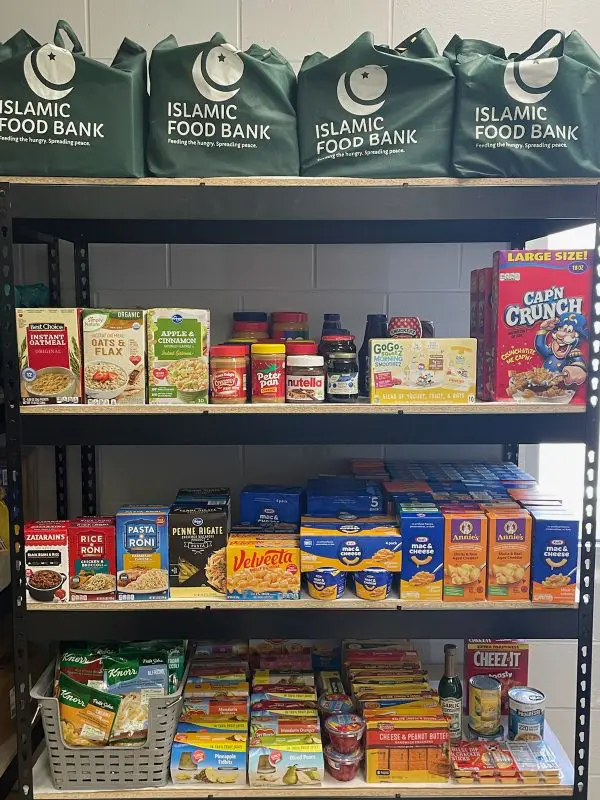
The following year, IFB requested assistance from Prof. Orr for support at one of our other pantries. We were beginning the process of accessing a new in-kind food donation organization and knew that Prof. Orr had familiarity with them. With her help, IFB was able to successfully establish the relationship. As a result, the pantry is now regularly stocked with fresh dairy and produce, condiments, and breakfast items that guests desired but were previously unable to access.

2. Increased trust of the community

Pantries should ensure that they are a part of the community fabric, rather than coming in as an outsider. When communicating and requesting feedback, a community-based organization seems less intrusive and judgmental than an external organization. This, in turn, increases the likelihood of honest feedback. With quality feedback, pantries can respond to the desires and requests of guests. Responding to feedback reinforces the position of the pantry as part of the community because it is clear that the sponsoring organization respects its guests.

At the IFB, we have found success with anonymous surveys as a tool to obtain guest feedback. In one IFB pantry, for example, in response to guest feedback, our offerings now include a variety of fruits and vegetables like plums and asparagus, fish, and an array of spices and condiments. As guests saw that their feedback was heard and implemented, they became more comfortable with leaving useful comments.

3. Mutual education regarding foods and their uses

With education, previously unfamiliar foods become useful to guests. By meeting guests near their knowledge base and demonstrating to them that pantry staff understand the importance of the foods that are familiar to them, guests and staff develop mutual trust. Bringing in familiar, culturally relevant foods allows guests to find what they need and also feel safe asking staff about unfamiliar items. Guests should be treated as experts in their own needs; pantry staff should be willing to learn from guests as well.

In our experience at the Islamic Food Bank, simple conversations with guests allow us to establish credibility. Volunteers are encouraged to be accessible while guests are shopping. They can answer questions about pantry guidelines or ask in a non-judgmental manner about the items that guests have picked up. Once, when I was helping at the pantry, I noticed a guest had picked up canned beef and asked them the best way to use it. They were happy to share a recipe that I have since passed on to other guests, especially those who are new to using a food pantry and unfamiliar with some of the staple canned goods. Later, a different guest asked me what a parsnip was and how to make it! (For the record, I advised them to dice it, then simmer it in chicken stock with curry powder or their favorite seasoning until they could mash it like a potato.)

4. Better understanding of other needs of the community beyond food

The Islamic Food Bank Pantry at the Perrysburg Heights Community Association (PHCA) serves an average of approximately 20 households per week. The pantry is primarily managed by the PHCA social worker. IFB works closely with this social worker to learn about guest responses to the items in the pantry. We also learn about other needs, such as  housing concerns. Through our network of collaborative partnerships, we were able to connect PHCA with a housing support organization. 

IFB issues surveys to guests at two of our pantries on a regular basis. Because we have built trust with the guests, they are willing to honestly answer survey questions that go beyond their food needs. From survey responses, for instance, IFB learned that many guests live with chronic health conditions like high blood pressure, food allergy, and anxiety/depression. IFB has existing relationships with area health systems. By connecting them with PHCA, programs are in development to meet pantry guests’ holistic needs.

5. Improved mental and physical community health

Our guests are more than just visitors to the pantry. They are also our friends and neighbors. Responding to the needs of guests will improve overall mental and physical health in our communities. A 2021 study in Canada found that “people who accessed food banks that offered a Choice model of food distribution and food banks that were integrated within Community Resource Centres” had an improved mental health score over their baseline after 18 months.4 In addition to meeting the criteria above, responding to guest requests for items means that when they come in to make their choices, they can choose among items they want and that meet their needs.

From survey data at one IFB pantry, guests have indicated a nearly 30% improvement in perceived household health and a nearly 25% improvement in perceived household happiness since their initial visits. Alleviating some aspects of food insecurity and responding to guest requests has a beneficial impact on health and happiness outcomes for members of our community. In turn, this positive impact extends outward to the entire community. A 2008 study found that a person’s happiness can extend up to three degrees of separation, creating clusters of happiness within networks of people.5

Conclusion

While financial and logistical challenges abound for food banks and food pantries, providing culturally relevant and in-demand foods benefits both pantries and guests. Through the trust-building process, pantries strengthen their network of community partners to become more responsive to guest wants and needs, increase quantity and quality of pantry offerings without increasing overall costs, and leverage relationships to respond to community needs beyond food. By working together and determining gaps in services that other organizations are unable to fill, we can maximize the effectiveness of our collective resources.


References

  1. Sharareh, N., Seligman, H. K., Adesoba, T. P., Wallace, A. S., Hess, R., & Wilson, F. A. (2023). Food Insecurity Disparities Among Immigrants in the U.S. AJPM focus, 2(3), 100113. https://doi.org/10.1016/j.focus.2023.100113
  2. Odoms-Young, A., & Bruce, M. A. (2018). Examining the Impact of Structural Racism on Food Insecurity: Implications for Addressing Racial/Ethnic Disparities. Family & community health, 41 Suppl 2 Suppl, Food Insecurity and Obesity(Suppl 2 FOOD INSECURITY AND OBESITY), S3–S6. https://doi.org/10.1097/FCH.0000000000000183
  3.  Hradek, Christine. “Food Pantry Clients Try New Foods.” SNAP-Ed Connection (blog), April 19, 2022. https://snaped.fns.usda.gov/success-stories/food-pantry-clients-try-new-foods.
  4. Rizvi, A., Wasfi, R., Enns, A. et al. The impact of novel and traditional food bank approaches on food insecurity: a longitudinal study in Ottawa, Canada. BMC Public Health 21, 771 (2021). https://doi.org/10.1186/s12889-021-10841-6
  5. Fowler J H, Christakis N A. Dynamic spread of happiness in a large social network: longitudinal analysis over 20 years in the Framingham Heart Study BMJ 2008; 337 :a2338 doi:10.1136/bmj.a2338